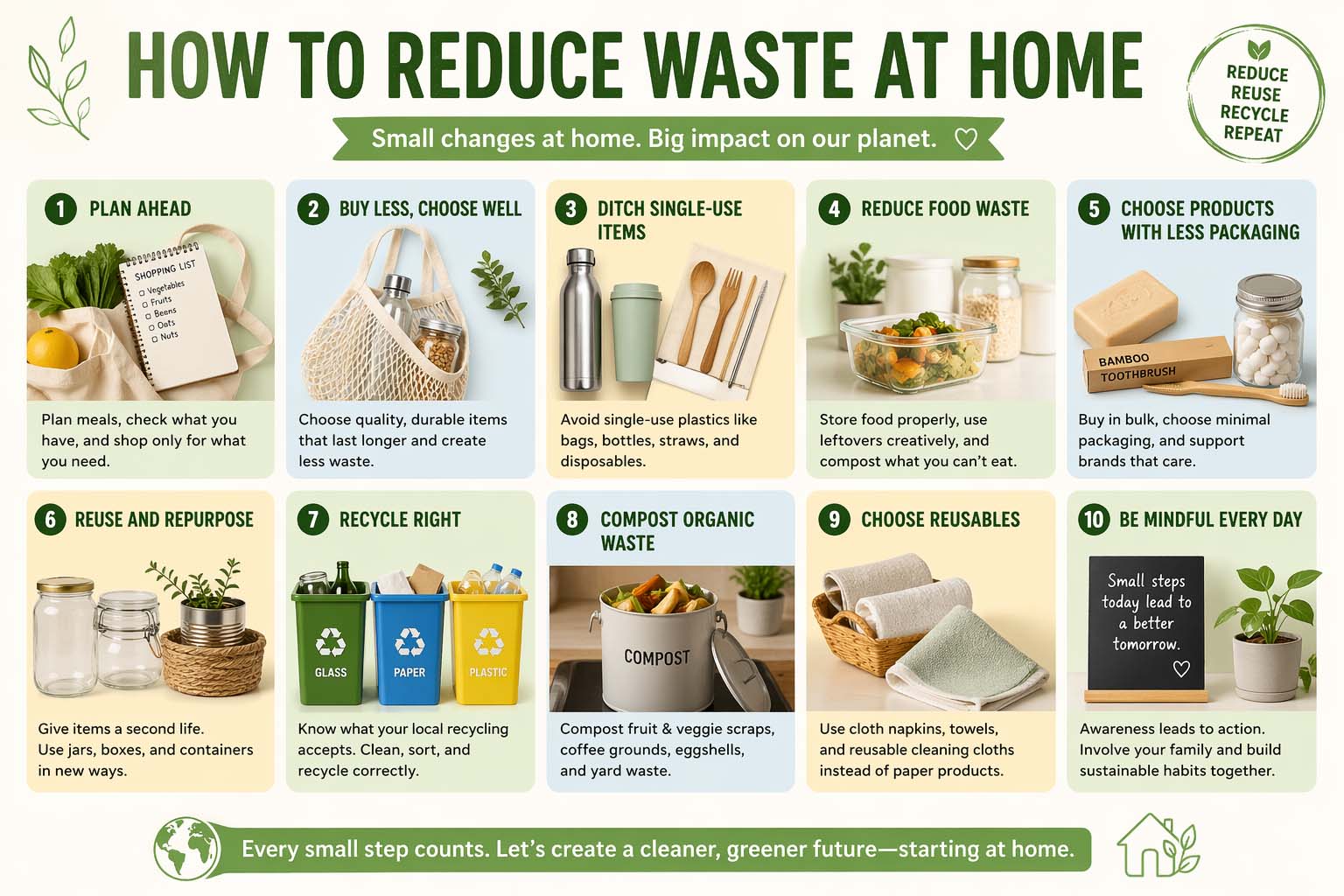
Learning how to reduce waste at home is one of the easiest ways to save money, protect the environment, and create a cleaner lifestyle. Every household produces waste each day through food packaging, leftovers, plastic items, paper products, and unused belongings. While some waste seems unavoidable, many simple habits can significantly lower the amount sent to landfills.
Reducing household waste does not require drastic lifestyle changes. Small steps such as reusing containers, buying smarter, composting food scraps, and avoiding single-use items can make a major difference over time. Whether you live alone, with family, or in a small apartment, this guide will help you build sustainable habits that work in real life.
Why Reducing Waste at Home Matters
Household waste affects both personal budgets and the planet. The more items we throw away, the more resources are used to replace them. Landfills also create environmental problems, including pollution and greenhouse gas emissions.
Benefits of Reducing Waste:
- Saves money on unnecessary purchases
- Creates a cleaner home
- Reduces landfill waste
- Conserves natural resources
- Encourages mindful shopping
- Helps future generations
Even small changes made consistently can have long-term impact.
Start With a Waste Audit
Before changing habits, look at what you throw away most often.
Common Household Waste:
- Food scraps
- Plastic packaging
- Paper towels
- Bottles and cans
- Broken or unused items
- Clothing
- Delivery packaging
Track your trash for one week. Once you see patterns, it becomes easier to reduce waste in the biggest problem areas.
Reduce Food Waste
Food waste is one of the largest sources of household trash. Better planning can save money and reduce garbage.
Smart Food Waste Tips:
- Make a weekly meal plan
- Shop with a list
- Use leftovers creatively
- Freeze extra food
- Store produce properly
- Rotate older items first
- Cook realistic portions
Using what you already have before buying more is a simple but powerful habit.
Use Reusable Products
Single-use products create constant waste. Switching to reusable options quickly reduces trash.
Helpful Reusables:
- Cloth shopping bags
- Refillable water bottles
- Reusable food containers
- Cloth napkins
- Glass jars
- Reusable coffee cups
- Metal straws
These items often save money after the initial purchase.
Buy Less Packaging
A lot of household waste comes from packaging rather than the product itself.
How to Reduce Packaging Waste:
- Buy in bulk when practical
- Choose products with recyclable packaging
- Buy loose produce instead of wrapped items
- Use refill stations when available
- Purchase durable goods over disposable ones
Mindful shopping reduces waste before it enters your home.
Recycle Properly
Recycling helps, but only when done correctly. Learn local recycling rules because they vary by area.
Common Recyclables:
- Cardboard
- Paper
- Glass bottles
- Aluminum cans
- Certain plastics
Avoid Common Mistakes:
- Putting dirty containers in recycling
- Mixing non-recyclables with recyclables
- Ignoring local sorting rules
Clean and sort items properly for better results.
Compost Organic Waste
Composting turns food scraps into nutrient-rich material for gardens and plants.
Great Compost Materials:
- Fruit peels
- Vegetable scraps
- Coffee grounds
- Tea leaves
- Eggshells
- Yard trimmings
Avoid Adding:
- Meat
- Dairy
- Oily foods
Even apartment dwellers can try countertop compost bins or community composting.
Switch From Disposable to Durable
Disposable items seem convenient but create ongoing waste.
Replace These:
- Paper towels with cleaning cloths
- Disposable razors with reusable razors
- Plastic wrap with containers
- Disposable batteries with rechargeable ones
- Cheap low-quality goods with durable products
Buying once can be better than buying repeatedly.
Reduce Waste in the Bathroom
Bathrooms often contain many disposable products.
Easy Bathroom Changes:
- Use refillable soap dispensers
- Buy shampoo bars
- Use reusable makeup pads
- Choose bamboo toothbrushes
- Buy larger refill sizes
Small swaps here add up quickly over time.
Declutter Responsibly
Unused items often become waste if ignored too long.
Better Options Than Throwing Away:
- Donate clothes
- Sell usable electronics
- Repair broken items
- Repurpose furniture
- Gift unused household goods
One person’s unused item may still be valuable to someone else.
Save Paper at Home
Paper waste is common but easy to reduce.
Smart Paper Habits:
- Switch to digital bills
- Use both sides of paper
- Stop junk mail when possible
- Use reusable towels for cleaning
- Print only when necessary
These habits reduce clutter and waste.
Reduce Energy and Water Waste
Waste reduction is not only about trash. Wasting energy and water also matters.
Home Efficiency Tips:
- Turn off unused lights
- Fix leaks quickly
- Run full laundry loads
- Use energy-efficient bulbs
- Unplug devices when not needed
- Take shorter showers
Lower waste often means lower bills too.
Teach the Whole Family
Waste reduction works best when everyone participates.
Family Ideas:
- Recycling stations in the kitchen
- Leftover challenge nights
- Reusable lunch kits
- Reward kids for eco habits
- Donation days for old toys and clothes
When everyone helps, habits become easier to maintain.
Budget Benefits of Reducing Waste
Many people think sustainable living is expensive, but reducing waste often saves money.
Examples:
- Reusable bottle instead of bottled water
- Meal planning reduces grocery waste
- Durable goods last longer
- Lower utility bills from energy savings
- Repairing instead of replacing
Waste reduction can be financially smart.
Common Mistakes to Avoid
Avoid These Errors:
- Trying to be perfect immediately
- Buying unnecessary “eco” products
- Ignoring food waste
- Forgetting to plan meals
- Throwing away reusable items too soon
Progress matters more than perfection.
Easy 7-Day Waste Reduction Challenge
Day 1:
Use reusable bags.
Day 2:
Plan meals for the week.
Day 3:
Set up recycling bins.
Day 4:
Use leftovers creatively.
Day 5:
Replace one disposable product.
Day 6:
Donate unused items.
Day 7:
Review what still creates waste.
Simple weekly actions build lasting habits.
Long-Term Sustainable Mindset
Instead of asking, “Can I recycle this?” ask:
- Do I need this?
- Can I borrow it?
- Can I reuse something I already own?
- Will this last a long time?
Buying less is often the best waste reduction strategy.
Conclusion
Learning how to reduce waste at home starts with awareness and simple daily choices. By reducing food waste, using reusable products, recycling properly, composting scraps, and buying more intentionally, any household can lower waste significantly.
You do not need to change everything overnight. Start with one habit, stay consistent, and build from there. Over time, reducing waste at home creates a cleaner space, saves money, and supports a healthier planet.